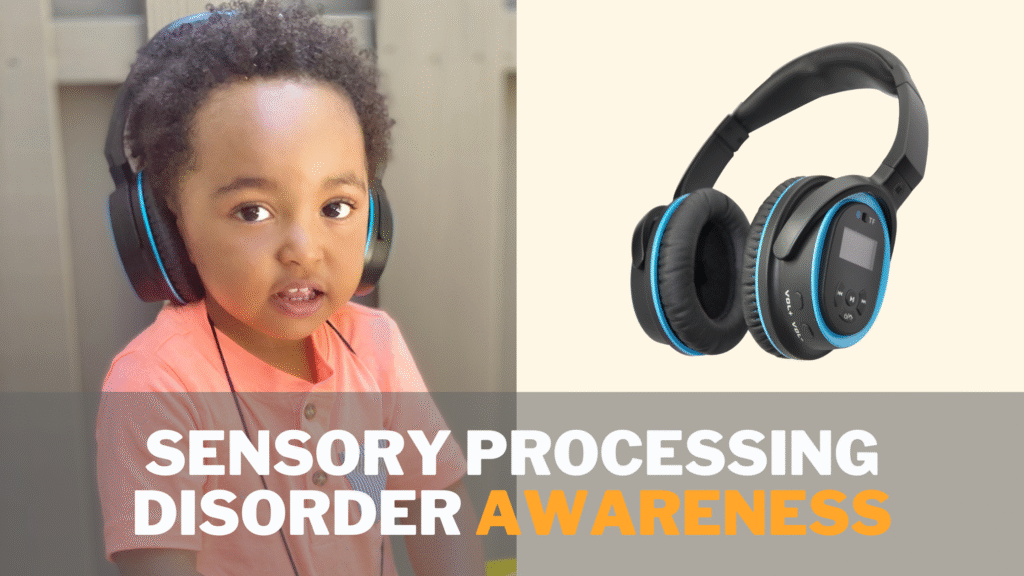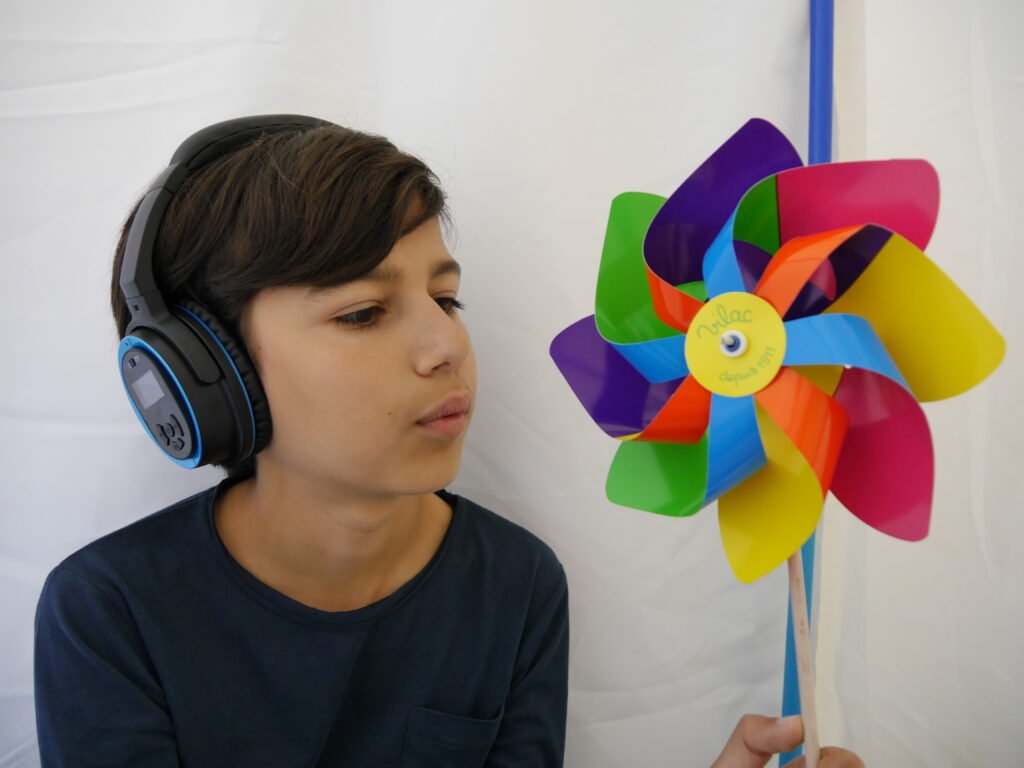
One of the more intriguing frontiers in therapies for neurodevelopmental conditions (such as ADHD, autism spectrum disorder, and auditory processing disorder) lies not in purely cognitive interventions but in re-engaging more foundational sensory-motor systems. In particular, combining vestibular stimulation with movement that targets primitive or developmental reflexes can help organize brain-body integration. Devices like the Soundsory® headset offer a portable, evidence-anchored way to bring this into the home.
1. Vestibular System, Primitive Reflexes & Neurodevelopment — the “Foundational Layers”
What are primitive (or infant) reflexes?
Primitive reflexes are automatic, stereotyped movement responses governed by brainstem circuits and meant to appear (and then inhibit) in infancy. For example:
- The asymmetrical tonic neck reflex (ATNR): when the infant turns the head to one side, the arm on that side extends and the opposite arm bends
- Moro reflex (startle)
- Rooting, grasp, palmar grasp, etc.
In typical development, these reflexes are gradually inhibited or integrated as the cortex and higher brain networks mature. If certain reflexes persist (or are only partially integrated), they can impose constraints on later voluntary movement, posture, balance, and sensorimotor coordination. (Frontiers)
Several authors have posited that retained primitive reflexes (RPRs) are disproportionately common in children with ADHD, ASD, learning difficulties, motor delays, and sensory processing disorders. (Frontiers)
For example, a paper in Frontiers in Neurology describes associations between motor incoordination, clumsiness, gait asymmetry, and persistent reflexes in ASD/ADHD populations. (Frontiers)
In effect, these reflexes represent a low-level constraint on how freely the sensorimotor networks can adapt. If they don’t “let go,” the brain must constantly work around them, adding noise, inefficiency, or interference to higher functions (like attention, regulation, or reading). (NeuroLaunch.com)
The vestibular system’s role in brain development and balance
The vestibular system (in our inner ears) senses head motion, acceleration, and gravitational orientation. It plays a central role in balance, postural control, spatial orientation, eye movements, and integrating information across sensory systems (vision, proprioception, auditory).
Because vestibular input is deeply interconnected with brainstem nuclei, cerebellum, and cortical networks, it can act as a kind of “sensory anchor” or stabilizer for higher processing. Disruptions or under-utilization of vestibular pathways can lead to greater noise in those systems, making tasks like auditory discrimination, spatial hearing, or sustained attention more difficult.
Interestingly, vestibular stimulation has been explored in ADHD settings: one article (Neurologic Wellness Institute) mentions that vestibular rehabilitation had measurable positive effects on attention, hyperactivity, and executive control in some children. (neurologicwellnessinstitute.com)
Moreover, recent work in ASD shows that children benefit, in motor and behavioral domains, from vestibular and proprioceptive exercise protocols. (ScienceDirect)
So, in summary:
- Persistent primitive reflexes act as constraints on sensorimotor fluidity
- Vestibular stimulation offers a way to “prime” and support sensorimotor integration
- Together, they form a foundation upon which higher processes (attention, auditory discrimination, emotional regulation) can more stably operate
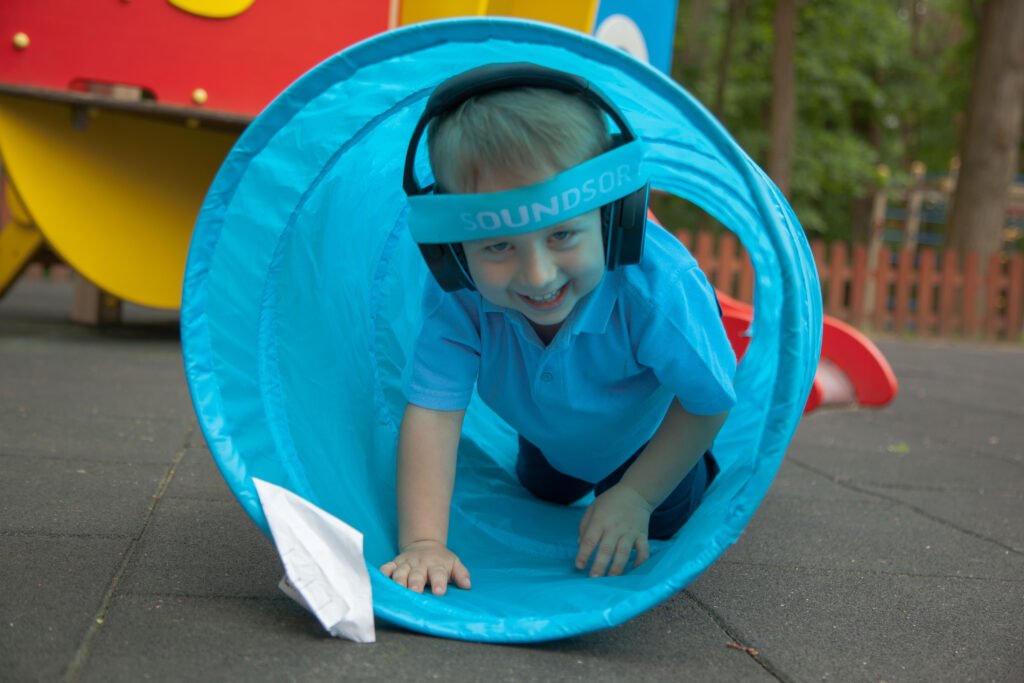
2. Movement + Vestibular Stimulation: Mechanisms & Outcomes
How does combining movement (especially movement that echoes infant reflex patterns) with vestibular stimulation help?
a) Reflex integration by movement
When movement patterns mimic or challenge primitive reflex circuits in a controlled, graded way, they can encourage the nervous system to gradually inhibit or override the reflexive responses. In essence, you’re coaxing the brainstem & spinal circuits to remap or re-balance. This approach is central to many “reflex integration” or “neurodevelopmental movement” programs. (moveplaythrive.com)
In a recent study with children with ADHD and ASD, a 12-week structured exercise intervention (rhythm, balance, co-ordination) was shown to reduce certain primitive reflex retention (e.g. ATNR) and improve fine motor coordination, along with measurable behavioral improvements (in the ADHD group, Conners indices decreased). (MDPI)
This provides empirical support (albeit not yet large-scale replication) that reflex integration via movement is feasible and can yield functional benefit.
b) Vestibular stimulation as amplifier / scaffold
Movement alone is effective, but pairing it with vestibular input can accelerate or magnify the effects. The vestibular system can act like a stabilizing scaffold, helping the brain “tune in” more precisely to the movement patterns. This reduces internal noise and allows more precise calibration of proprioception, spatial mapping, and sensorimotor control.
Especially in neurodiverse individuals who may under-utilize or have weak vestibular input, stimulating that pathway concurrently helps anchor movement signals.
c) “Cross-modal” effects and generalization
One fascinating angle: vestibular stimulation may lead to cross-modal improvements in other sensory thresholds. For example, a study on noisy galvanic vestibular stimulation (i.e. applying a mild “noise” current to the vestibular system) found that visual perceptual thresholds improved (i.e. participants could detect finer visual signals) while auditory thresholds were unaffected. This suggests that vestibular input can improve sensory discrimination beyond just balance. (arXiv)
Thus, the benefits may generalize: better sensory discrimination, less noise in integration, improved attentional gating, and more stable executive control.
Putting it all together: when we provide a rhythmic auditory stimulus (which engages auditory pathways) and concurrently challenge the movement/vestibular circuits (through carefully designed exercises), we are giving the brain a rich, multi-sensory “workout.” This helps reorganize neural pathways, strengthen weak connections, and reduce interference from unintegrated reflexes.
3. The Soundsory® Device & Program: What It Does and Why It’s Useful
Now that we have the theoretical scaffolding in place, let’s see how the Soundsory® system embodies these principles in a consumer-accessible format.
What is Soundsory?
Soundsory is a home-based, multisensory listening + movement program designed for motor delay, ASD, auditory processing disorders, and related challenges.
At its core, the program pairs rhythmically processed music (via special filters) with movement-based exercises, aiming to simultaneously stimulate auditory and vestibular systems.
One of its distinguishing features is the use of bone conduction (in combination with air conduction) to deliver the auditory stimulus.
Here’s how it works in outline:
- The music is processed via a dynamic filter to emphasize rhythm and modulate frequencies.
- The headset delivers the music via both bone conduction and air conduction. The bone conduction “primes” the auditory system and vestibular pathways.
- Movement exercises are implemented during or around the listening sessions. These are structured in levels (accessible via an app or platform).
- The program is designed to be used daily (~30 minutes per day over 40 days, in many implementations) and is user-friendly.
Why bone conduction?
Bone conduction is interesting because it bypasses the eardrum and delivers vibrations directly through skull bones to the cochlea. In Soundsory’s model:
- It “prepares” or “awakens” the auditory system to the rhythmic stimulus, helping it more readily attend to the sound signal.
- It also transmits vibrations to structures close to vestibular organs (due to proximity), potentially offering a mild vestibular stimulus.
- Combining bone + air conduction provides redundant paths for stimulation, which may help robustness of effect (i.e. if one pathway is noisy or weaker in a person).
5. Cost, Access & Advantages Over Traditional Integrated Listening Systems
One of the compelling arguments for your readers is: Soundsory offers an accessible, lower-cost, home-based alternative (or complement) to clinic-based integrated listening programs. Here’s how it compares:
Traditional integrated listening / auditory therapy systems
Some of the more established approaches for auditory processing training include:
- Tomatis® Method: In-clinic sessions using filtered music, listening protocols, assessment, often over many hours/days/weeks
- Integrated Listening Systems (e.g. iLs, Fast ForWord, etc.) or specialized “listening labs”
- In many cases, these require specialized equipment, therapist supervision, travel, scheduling, and higher costs per hour
These clinic-based systems can be powerful, but they often carry high costs and accessibility constraints (geographical, time, compliance). Many families can’t commit to frequent clinic visits, travel, or the cost burden.
Advantages of a home-based system like Soundsory
- Lower cost per use: Once the headset and program are purchased, you can reuse daily without ongoing clinic fees (though support may cost extra).
- Portability & convenience: You can use it anywhere (at home, while traveling) rather than commuting to a clinic.
- Self-pacing / flexibility: Users can take breaks, adjust timing, repeat days, etc., with less pressure.
- Complementary to therapy: It can supplement other OT, speech, behavioral therapies you already have in place.
- Scalability: Multiple family members can share, or evolve with age/needs.